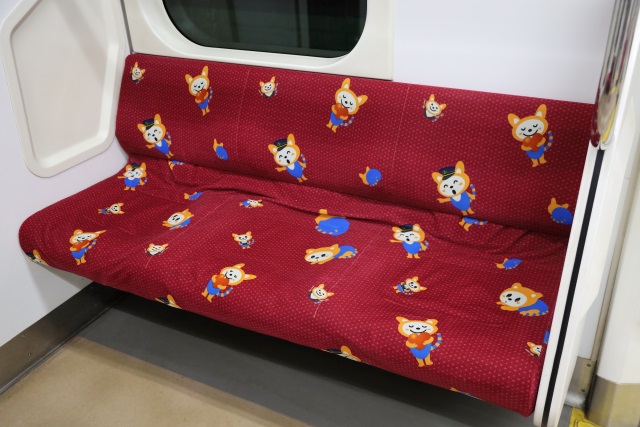
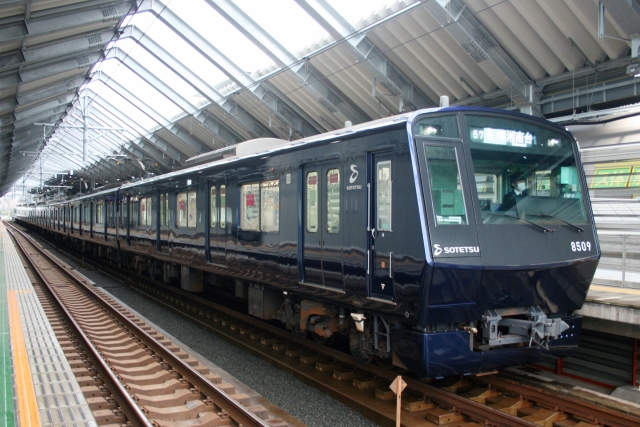
Showing posts with label Sotetsu. Show all posts

Saturday, 23 May 2026

The 13000 Series EMU: Sotetsu's New Train Model

Sotetsu 13000 series EMU at Atsugi Railyard

I recently joined an event hosted by the Japan Railfan Club—a test ride and photo session featuring Sotetsu’s newest commuter train, the 13000 series EMU. Today, I’d like to share my experience with you.

To begin, let me briefly introduce Sotetsu and the new train models the company has rolled out over the past few years.

Sotetsu is a major private railway company based in Yokohama City, operating a 44.4-kilometer network in Kanagawa Prefecture. Until about seven years ago, its biggest business challenge was that its network did not connect directly to central Tokyo. To overcome this, Sotetsu constructed two new connecting lines—one linking to the JR East network and another to the Tokyu network. Since 2019, Sotetsu trains have been running through onto JR East lines using the 12000 series new EMU, and since 2023, onto Tokyu lines as well using the 20000 and 21000 series new EMUs.

Even after completing these major projects, Sotetsu did not slow down its capital investment. On March 30th this year, it introduced a brand-new train: the 13000 series EMU.

The 13000 series will replace the older 8000 and 9000 series EMUs, operating exclusively on Sotetsu’s own lines without interoperation with other networks. Each trainset consists of eight cars—two fewer than the existing 8000 and 9000 series trainsets. This reduction reflects the company’s projection of a declining population along the Sotetsu lines, in line with Japan’s broader demographic trend.

As a train enthusiast, I was impressed by Sotetsu’s meticulous attention to design details. Look at the photo above—you can see the 13000 series’ distinctive “face,” inspired by strong marine creatures and created collaboratively by an art director, a designer, and a generative AI system. I also noticed a brown-colored accent inside the front lights from very close range (see the photo below). According to Sotetsu, this represents the hue of rusty rails. Sotetsu’s attention to detail is remarkable!

I’m running out of space here, so I’ll save the technical specifications of the 13000 series for a future post. Please look forward to it!

Close-up of the brown accent inside the headlight assembly

Related link:

Thursday, 14 May 2026

The 13th Generation Sounyan Train

Set 11004 of the Sotetsu 11000 series EMU, the 13th generation Sounyan Train

I am happy to share this annual topic with you again this year. On March 16, the 13th generation “Sounyan Train” debuted on the Sagami Railway (Sotetsu) lines.

First, let me briefly introduce Sotetsu and the Sounyan Train.

Sotetsu is a major private railway company based in Yokohama, operating a 44.4-kilometer network in Kanagawa Prefecture. Its lines are double-tracked, electrified at 1,500 V DC, and use a track gauge of 1,067 mm. Since 2019, Sotetsu trains have run through onto JR East lines, and since 2023, onto Tokyu lines as well.

The Sounyan Train is a special train set decorated with Sotetsu’s mascot character, Sounyan. It first appeared in 2014, and its design, both exterior and interior, has been updated every year.

According to the company’s website, Sounyan is a new species of cat who works in public relations as an official employee of Sotetsu. His mission is to help more people learn about the company. To do this, he often appears at events and interacts with visitors. He also writes his own blog and even works as part of a train crew. In the photo above, you can see Sounyan sitting in the driver’s cab, doing his job.

Joking aside, the 13th generation Sounyan Train is assigned to Set 11004 of the 11000 series EMU. The 11000 series entered service in 2009 to replace the aging 5000 and 7000 series. A total of five sets (50 cars) were built by Tokyu Sharyo and JR East’s Niitsu factory. To reduce manufacturing costs, the series shares common technical specifications with JR East’s E233 series.

Finally, let’s take a look at the interior of the 13th generation Sounyan Train (see the photo below). In this design, Sounyan is shown enjoying mamemaki (a bean-throwing ceremony) with his friends, a rabbit and a squirrel. Mamemaki is a traditional event in which people throw roasted soybeans to drive away evil spirits and invite good fortune, shouting, “Demons out, fortune in!”

Sounyan, keep up the good work!

Interior of the 13th generation Sounyan Train

Monday, 15 December 2025

Sotetsu Line History Train

Set 9703 of the Sotetsu EMU 9000 series, Sotetsu Line History Train

Sagami Railway (Sotetsu) will celebrate the 100th anniversary of the Sotetsu Line in 2026. As you know, Sotetsu is one of the major private railway companies in the Tokyo metropolitan area (see my blog from March 20, 2025). To commemorate this milestone, the company launched several special events in September. One highlight was the introduction of the “Sotetsu Line History Train,” using Set 9703 of the EMU 9000 series. Set 9703 is decorated with stickers featuring historical rolling stock from Sotetsu’s past. For example, steam locomotive Unit 3, which debuted in 1926, and the EMU 13000 series, which will enter service next year, are both depicted on a commemorative sticker mounted on the front of the train (see the photos). The excitement for the 100th anniversary is really building, isn’t it? If you have time, please check the URL at the bottom of this post to see the design of the Sotetsu Line History Train. Congratulations to the Sotetsu Line on its 100th anniversary!

This is off-topic, but please look at the top photo again. It was taken at Izumi-chuo Station, my regular photo spot on the Sotetsu Line. The weather was clear and the lighting was from the front, so photographing should have been a piece of cake. But I pressed the shutter too early, and the electrification poles got in the way. I was careless at that moment. In Japan, there is a saying: “Even monkeys fall from trees.” In English, you would say, “Even Homer sometimes nods.” I was the monkey that time (I’m certainly not a great person like Homer).

Commemorative sticker displayed on the front of Set 9703

Tuesday, 9 December 2025

Tracing the Fate of an “Urban Secluded Station”

The special poster train, Yumegaoka SORATOS, arriving at Yumegaoka Station

Do you remember my post from three years ago about the urban secluded station, Yumegaoka? Today, I’d like to share a little update on how things have changed since then.

Let’s start with a quick look at Yumegaoka Station. It is located in Yokohama City on the Sotetsu (Sagami Railway) Izumino Line. When I visited in 2022, there were no shops or houses around the station at all. The daily ridership was only about 1,000 passengers. It really lived up to the name “urban secluded station.”

So, what does it look like three years later? Please take a look at the photo below. Yes — that’s a giant shopping mall, SORATOS, standing right in front of Yumegaoka Station. It was opened by the Sotetsu Group in July 2024. With more than 130 shops, restaurants, a theater, and much more, Yumegaoka now sees over 8,500 passengers per day.

Sotetsu is actively promoting shopping at SORATOS. In the top photo, you can see a special poster train called the Yumegaoka SORATOS, using Set 10707 of the EMU 10000 series. It commemorates the cumulative 3 million riders at Yumegaoka Station since SORATOS opened. The train features Sotetsu’s mascot character, Sounyan, on both the front and the sides — and it looks absolutely adorable!

I really enjoyed seeing the Yumegaoka SORATOS train and exploring the new mall. But at the same time, I felt a touch of sadness, because the once quiet, secluded station has transformed into a lively hub you might find anywhere in the city. Being a rail fan is a mixed bag, isn’t it?

Interior of the SORATOS shopping mall in front of Yumegaoka Station

Related link:

Saturday, 13 September 2025

A Hanging Strap with a Unique Design

Sounyan-themed hanging strap, Set 8713 of the Sotetsu EMU 8000 series

Sorry for the trivial topic today, but let me start with a question: Are there any hanging straps on commuter trains in your country? In Japan, yes, there are. Commuter trains in major cities are always crowded, so hanging straps are essential to keep passengers safe and prevent accidents. Here’s another question: Have you ever seen a hanging strap with a unique design in your country? In Japan, we have!

They say “a picture is worth a thousand words,” so please take a look at the top photo. I found this strap inside Set 8713 of the Sotetsu EMU 8000 series. It has two ear-like protrusions on top of the ring. Doesn’t it look like someone? ...It’s Sounyan! As I mentioned before, Sounyan is Sagami Railway’s (Sotetsu’s) mascot character. He helps create a friendly image for the railway and adds value to the Sotetsu Line. Sounyan is a cat and an official “employee” of Sotetsu, working in public relations. On this train, a Sounyan-themed strap is installed in part of one car. Isn’t that cute?

Incidentally, the Sotetsu EMU 8000 series was introduced in 1990. A total of 13 sets (130 cars) were built by Hitachi. Currently, six sets (60 cars) are still in service after undergoing refurbishments. For example, the headlights of Set 8713 have been relocated to the top of the cab, as seen in the photo below. I hope Set 8713, with its Sounyan-themed hanging strap, continues to operate for years to come.

Set 8713 of the Sotetsu EMU 8000 series on the Izumino Line

Saturday, 19 April 2025

The 12th Generation Sounyan Train

The 12th generation Sounyan Train (westbound) arriving at Izumi-chuo station

On March 31st, Sagami Railway (Sotetsu) launched the 12th-generation Sounyan Train. Today, I’d like to show you this new “poster train.”

Let’s start with a quick review of Sounyan. He’s Sotetsu’s mascot character—a “new species of cat,” according to the company’s website. He was born on March 10th somewhere along the Sotetsu Line, joined Sotetsu in 2014, and has been working in public relations ever since. He’s good at finding new things, and his hobbies are photography and eating out.

He seems like a fine young cat, but he also has a small mental burden—people often mistake him for a raccoon dog! That has apparently troubled him for a long time. What a detailed backstory he has! Well, as they say, no one can live on sweet words alone.

Jokes aside, the purposes of the Sounyan Train are to promote the charm of the Sotetsu Line and to give passengers a relaxing experience.

Trainset 11002 of the EMU 11000 series is used for this 12th-generation version. The 11000 series is Sotetsu’s commuter train that debuted in 2009. To reduce manufacturing costs, it shares most of its technical specifications with JR East's EMU E233 series.

Please look at the top photo. A stuffed Sounyan is sitting in the driver’s cab! It’s so cute—but I feel like I’ve seen something similar before... Let me think—oh, yes, Odakyu’s “Mocoron”!

Incidentally, you can check out my past posts about the 1st3rd4th10th, and 11th-generation Sounyan Trains as well.

The 12th generation Sounyan Train (eastbound) arriving at Yumegaoka station

Official information about the 12th Sounyan Train by Sotetsu (in Japanese):

Thursday, 20 March 2025

Revival "Shopping Train" on the Sotetsu Line

Trainset 11002 of the EMU Sotetsu 11000 series, "Okaimono Densha"

I realized that I haven’t written about Sagami Railway (Sotetsu) for quite some time. I couldn’t think of any recent topics, so I searched my hard disk and found some unreleased photos. Today, I’d like to show you a Sotetsu train from two years ago.

Before that, let’s briefly review Sotetsu. It’s a major private railway company based in Yokohama, operating a 44.4-kilometer-long network in Kanagawa Prefecture. The line is double-tracked, electrified at 1,500 V DC, and has a 1,067-millimeter gauge. Since 2019, Sotetsu trains have been running through onto JR East lines, and since 2023, onto Tokyu lines as well.

Now, let’s move on to today’s main topic. In 2023, Sotetsu operated a special revival train called “Okaimono Densha” (Shopping Train). The original Okaimono Densha was introduced in the 1960s to carry shoppers to Yokohama. It was an express train that displayed special headmarks on the front of the EMU 5000 series. Sixty-three years later, Okaimono Densha returned to the Sotetsu line, this time using trainset 11002 of the EMU 11000 series.

The revival was mainly aimed at promoting “Joinus Yokohama,” a large shopping mall owned by Sotetsu. The train features a nostalgic front design inspired by the original Okaimono Densha, depicting a pigeon and a shopping basket—both symbols from the 1960s version.

Incidentally, the 11000 series is Sotetsu’s standard commuter train, which debuted in 2008. To reduce manufacturing costs, it shares many specifications with JR East's EMU E233 series.

A pigeon and a shopping basket are depicted on the front of "Okaimono Densha"

Official information about "Okaimono Densha" by Sotetsu (in Japanese):

Thursday, 26 September 2024

Revival Colored Trains on the Sotetsu Line

Set 10708 of the EMU Sotetsu 10000 series, "Previous red"

Sagami Railway (hereafter Sotetsu) launched special-colored trains. On May 18th this year, two sets of revival-colored trains were started to operate on the line. One is Set 10708, and another one is Set 10705 of the EMU 10000 series.

Let me review the EMU Sotetsu 10000 series. The 10000 series is one of Sotetsu's main fleets. It was launched in 2002 to replace old models. A total of 8 sets, 70 units, were built by Tokyu Sharyo (present J-TREC) and JR East Niitsu factory. To reduce the manufacturing cost, the 10000 series has common specifications with those of JR East's EMU E231 series. For instance, TIMS (Train Information Management System) is introduced in both the 10000 and the E231 series. One set of the 10000 series train is composed of 10 or 8 cars. MT ratio (the ratio of the number of motorcars to the trailers) is 1 (5M5T or 4M4T). 4 sets had already been renovated to the so-called “Yokohama Navy Blue trains”, but the special-colored trains on today’s topic still keep the original specifications.

Now, let's head to the main topic. Set 10708 (10-car train) has red-colored stripes on the front. This color is named “previous red”, which was taken from the retired Sotetsu train, such as the old-7000 series. On the other hand, Set 10705 (8-car train) has light-green-colored stripes. This color is named “nostalgic grass green”, which was taken from the original color of the 10000 series. Sotetsu is developing a variety of trains.

Set 10705 of the EMU Sotetsu 10000 series, "Nostalgic grass green"

Official information, Operation of specaial-colored trains by Sotetsu (in Japanese):

Tuesday, 6 August 2024

The 11th Generation Sounyan Train

Set 11004 of the Sotetsu 11000 series, "the 11th generation Sounyan train"

As I posted several times, many Japanese railway companies have their own mascot characters. The purpose of these characters is to make people feel familiar with the local railways. The railway mascot character is a solution to enhance the value of the railway line as well.

Sagami Railway (hereafter Sotetsu) is keen on spreading their mascot character, named Sounyan. According to Sotetsu's website, Sounyan is a cat and an employee of Sotetsu. He is in charge of public relations. His hobby is taking photos and eating around. Umm... I think that Sounyan is not very original, just an ordinary employee... but wait a moment! There is more to Sounyan's profile. He has a serious problem that has been bothering him. People tend to assume that he is a raccoon dog in spite of being a cat. I was surprised that Sounyan has a mental problem. What a deep profile it is!

So, let me finally get to the main part. On March 21st, Sotetsu launched the 11th generation Sounyan poster train. That's Set 11004 of the EMU 11000 series. This time, we can see not only Sounyan, but also images of several sightseeing spots, on the bodies of the Sounyan train. The sightseeing spots are, for example, Shibuya on the Tokyu line and Shinjuku on the Tokyo Metro line. Why are they on the other companies' lines? It is because Sotetsu trains are directly operated onto the Tokyu and the Tokyo Metro lines. Thoughtfulness to the colleague companies is important, isn't it?

Sounyan-printed priority seat (courtesy seat), the 11th generation Sounyan train

Official information about the 11th generation Sounyan train by Sotetsu (in Japanese):

Thursday, 4 July 2024

The 1st Anniversary of the Sotetsu-Shinyokohama Line

"The 1st anniversary train", set 20106 of the EMU Sotetsu 20000 series

Following the 1st anniversary of the Tokyu-Shinyokohama line, I'm going to show you a topic of the 1st anniversary of "another Shinyokohama line" today.

Let me quickly review the Shinyokohama lines. On the 18th of March, 2023, two new railway lines were inaugurated in Yokohama City, Kanagawa Prefecture. One is the Shinyokohama line of Tokyu Railways. The other one is the Shinyokohama line of Sagami Railway (hereafter Sotetsu). These two lines are connected at Shinyokohama station. A direct operation of the Tokyu and Sotetsu trains through Shinyokohama station was also started. What are the advantages of the opening of these lines for Sotetsu passengers? Firstly, they got a second access route to Tokyo by the Sotetsu-Tokyu direct operation trains. Secondly, transfer to the JR Central-Tokaido Shinkansen at Shinyokohama station became much easier.

In commemoration of the 1st anniversary, Sotetsu operated the anniversary trains from March 18th to May 6th. They are set 20106 of the EMU 20000 series and set 21107 of the EMU 21000 series. We could see the celebratory stickers on the front of these anniversary trains. Sotetsu's mascot character, "Sonyan", and Tokyu's mascot character, "Norurun", are seen on the stickers. Those two sets of the trains look similar, but the number of the vehicles per 1 set is different. Set 20106 is a 10-car train. On the other hand, set 21107 is an 8-car train. That's important information for trainspotters, isn't it?

Congratulations on the 1st anniversary of the Sotetsu-Shinyokohama line!

”The 1st anniversary train”, set 21107 of the EMU Sotetsu 21000 series

Official information about the 1st anniversary of Sotetsu and Tokyu Shinyokohama lines (in Japanese):

Sunday, 31 December 2023

Sounyan: 10 Years of Service

Set 11001 of the EMU Sotetsu 11000 series, "the10th anniversary of Sounyan" 

After posting about "Mokoron", Odakyu's new mascot character, I remembered that "Sounyan" has been working for 10 years at Sagami Railway (Sotetsu).

What's Sounyan? He(?) is Sotetsu's mascot character. According to Sotetsu's website, Sounyan is a new species of cat, born on March 10th on the Sotetsu line. He joined Sotetsu in 2014, and has been in charge of public relations. He is a curious cat, and loves to be around people. He is good at looking for something new or fun. It's the same as Odakyu's Mokoron. His hobby is taking photos and eating around. Me too. He has something that has been bothering him. People often think he is a raccoon dog in spite of being a cat. What an elaborate profile it is! Sounyan, congratulations on your 10th anniversary of devotional work!

I can't be written off here as this is a trainspotter's blog. Taking this opportunity, I'm going to show you Sotetsu's new Sounyan poster train. In commemoration of the 10th anniversary of Sounyan's service, Sotetsu launched a new Sounyan poster train on March 27th this year using set 11001 of the EMU 11000 series. The 11000 series is Sotetsu's commuter train which debuted in 2009 to replace the deteriorated 5000 and 7000 series. A total of 5 sets, 50 units, were built by Tokyu Sharyo and JR East Niitsu Factory. To reduce the manufacturing costs, it has basically a common design and the technical specifications with JR East's EMU E233 series on the Chuo Rapid line.

Front view of "the10th anniversary of Sounyan" poster train

Official information about "the 10th anniversary of Sounyan" poster train (in Japanese):
Timetable of "the 10th anniversary" of the Sounyan poster train (in Japanese):

Saturday, 8 July 2023

Inauguration of Two Shin-Yokohama Lines

EMU Sotetsu 21000 series arrives at Shin-Yokohama station

On the 18th of March, 2023, two new railway lines were inaugurated in Yokohama City, Kanagawa Prefecture. One is the Shin-Yokohama line of Sagami Railway (hereafter Sotetsu). The other one is the Shin-Yokohama line of Tokyu Railways. These two lines are connected at Shin-Yokohama station. A direct operation of Sotetsu and Tokyu trains through Shin-Yokohama station was also started on that day. What is the significance of the opening of these lines?

Firstly, Sotetsu got the second access route to Tokyo. Sotetsu is a major private railway company, but its weakness was its inconvenient line network. Sotetsu trains couldn't run into Tokyo until four years ago. Sotetsu's weakness was once mitigated in 2019, when the Sotetsu-JR East connecting line was completed. Since then, Sotetsu trains are directly operated onto the JR East lines to downtown Tokyo, but the story didn't end there. Sotetsu got another access route to Tokyo this time. That's the Shin-Yokohama line. Sotetsu trains are now directly operated onto the Tokyu and the other lines, and bound for the city center of Tokyo.

Secondly, transfer to the Tokaido Shinkansen at Shin-Yokohama station is much easier now. JR Central's Tokaido Shinkansen is an intercity high-speed railway bound for Osaka and other major cities, but the problem was the access to the transfer station in Yokohama City, namely Shin-Yokohama, because it's far from the downtown area. The completion of the new lines has made passengers easier to transfer to the Shinkansen at Shin-Yokohama station. Yokohama City is significantly changing.

Platform of Shin-Yokohama station

Official movie, the Sotetsu Shin-Yokohama Line (in Japanese):

Wednesday, 24 August 2022

Yumegaoka: Urban Secluded Station

Platform of Yumegaoka station on the Sotetsu-Izumino line

I look forward to visiting distinctive railway stations more than before. After a visit to the "station right above the river", I moved to an "urban unexplored station" on the Sagami Railway (Sotetsu).

Visiting unexplored railway stations is a popular journey among rail-fans. The definition of unexplored stations is not clear, but they get off at remote countryside stations, and enjoy the nature around there in general. It must be exciting experiences away from their everyday lives. Unexplored stations are also found in urban areas. They're secluded stations rather than unexplored stations. Yumegaoka is a good example. It's located in Yokohama City on the Sotetsu-Izumino line. This station was opened in 1999, but there are no shops and houses around there even now. Currently, the station is used by 1,000 passengers per day. The city of Yokohama has been planning a development project around the station with land owners. It's estimated to complete in 2024. I like Yumegaoka as the station design is innovative. The platform is covered by blue-colored curved steel frames. To protect passengers from the strong wind, the steel frames are covered by transparent acrylic boards.

Taking this opportunity, I also show you a picture of the EMU Sotetsu 11000 series arriving at Yumegaoka station. The 11000 series was launched in 2008 to replace the decrepit 5000 and 7000 series. 5 sets, 50 cars in total, were built by Tokyu Sharyo and others. To reduce the manufacturing costs, it has a common design and technical specifications with JR East's EMU E233 series.

EMU Sotetsu 11000 series arrives at Yumegaoka station on the Izumino line

Saturday, 8 January 2022

EMU 21000 Series: New Model on the Sotetsu Line

Set 21102 of the EMU Sotetsu 21000 series arrives at Tennohcho station

Sagami Railway (hereafter "Sotetsu") launched a new train model, the EMU 21000 series, for the direct operation between the Sotetsu and Tokyu-Meguro lines.

Let's quickly review the direct operation project. Sotetsu is a major private railway company, but the weakness is its inconvenient line network. Sotetsu trains couldn't run into downtown Tokyo two years ago. Sotetsu's weakness was mitigated in 2019, when the Sotetsu-JR East connecting line was completed. Sotetsu trains are now directly operated onto the JR East line to Shinjuku terminal in Tokyo, but the story didn't end there. Sotetsu then started constructing the second route to downtown Tokyo... the Sotetsu-Tokyu connecting line. Once the new line is completed, Sotetsu trains will be directly operated onto the Tokyu-Toyoko and Tokyu-Meguro lines, and bound for several subcenters in Tokyo starting from the fiscal year 2022.

For the second project, Sotetsu prepared two types of new trains... the EMU 20000 and 21000 series. The 20000 series was commissioned in 2018. The 21000 series then debuted in 2021. The former is composed of 10 cars, and will be operated onto the Tokyu-Toyoko line; while the latter consists of 8 cars, and will be operated onto the Tokyu-Meguro line. Technical specifications of the 20000 and 21000 series are mostly the same. They have ultramarine-colored aluminum-alloy bodies, mono-link type bolsterless bogies and a hybrid-SIC VVVF (variable-frequency drive) inverter electric control system with 190 kW traction motors.

Sotetsu is preparing for the direct operation onto the Tokyu-Toyoko and Tokyu-Meguro lines sufficiently enough in advance.

Set 21102 of the EMU Sotetsu 21000 series stands at Tennohcho station

Thursday, 28 October 2021

EMU Sotetsu 8000 Series: Update

Set 8711 of the EMU Sotetsu 8000 series arrives at Izumino-chuo station

After all the EMU 7000 series trains' retirement in November, 2020, the EMU 8000 series became the elder group of trains on the Sagami Railway (Sotetsu). Today, let me update on how the 8000 series is going.

In the first place, retirement of the 8000 series has started one by one. 4 sets, 40 cars in total, have already disappeared from the track. These 8000 series trains have been replaced by the new models, namely the 12000 and 20000 series. Sotetsu plans to decommission a total of seven sets (set 8701 to 8707) of the 8000 series within a few years. The next generation is already gaining power.

Secondly, the renovation of the 8000 series has started in parallel. Set 8709 became the first renovated 8000 series train. Its body color was changed to "Yokohama navy blue". The position of the front light was moved from the lower to the upper part. The passenger seats were also changed. The trains that the renovation applies to are 6 sets (set 8708 to 8713), which were built after 1994.

For your information, the 8000 series was commissioned in 1990. 13 sets, 130 cars in total, were built by Hitachi from 1990 to 1999. As a rail fan, I like the 8000 series because there are cross seats in the train. Although it's a commuter train, we can enjoy the atmosphere of the holiday tour sitting in the comfortable cross seats. It's a brief refreshing time for busy urban commuters.

Set 8709 (after renovation) of the EMU Sotetsu 8000 series

Official Sotetsu train picture book (machine translation):

Sunday, 24 October 2021

EMU Sotetsu 10000 Series: New Color

Set 10701 of the EMU Sotetsu 10000 series arrives at Hoshikawa station

I recently visited Yokohama City, as something came up. After finishing my meeting, I took a detour on my way back home, and enjoyed Sagami Railway (Sotetsu) for a while. It's been one and a half years since I last took the Sotetsu line. What's new with Sotetsu?

I came across a renovated train, set 10701 of the EMU 10000 series. It used to be a silver-colored train with blue and orange-colored stripes, but it has become ultramarine-colored (so-called Yokohama Navy blue-colored). Look closely, I also found that the position of the front lights had been moved from the lower to the upper part of the face following recent trends. In addition, I was surprised that the renovation had been conducted by JR East Nagano factory... not by Sotetsu's factory. It's probably because the 10000 series has the same specifications as those of the JR East E231 series.

This renovation was one of Sotetsu's projects to enhance the "company brand strength". Many railway companies in the Tokyo metropolitan area are in competition to attract passengers. It might be hard to imagine for foreigners, but I expect you understand that the railway network in the metropolitan area is dense, so, it allows the passengers to choose the best route to get to their destination.

For your information, the Sotetsu 10000 series was launched in 2002 to replace old models such as the 6000 series. 8 sets, 70 cars in total, were built by Tokyu Sharyo and JR East Niitsu factory.

Set 10701 of the EMU Sotetsu 10000 series stands at Hoshikawa station

Sotetsu official website (machine translation):
https://www.sotetsu.co.jp/?wovn=en
Official information about the EMU 10000 series, New Color (in Japanese):

Wednesday, 23 December 2020

Goodbye to the Sotetsu New 7000 Series

Set 7753 of the Sotetsu New 7000 series arrives at Izumi-chuo station
On November 8th, 2020, Sagami Railway (Sotetsu) held a special event to say goodbye to the EMU New 7000 series in Sagami-Otsuka railyard. Following the 7000 series, the New 7000 series had also finished its role. I couldn't join the farewell event, as the participants were limited and selected by a lottery. It was unfortunate, but it couldn't be helped due to the COVID-19 calamity.

The EMU Sotetsu New 7000 series was commissioned in 1986. A total of 60 cars was built by Hitachi. The appearance of the New 7000 is completely different from the original 7000 series, but the technical specifications of the early 20 cars of the New 7000 series were basically the same as those of the original 7000 series. For instance, they used the traditional right angle cardan systems on the bogies and a rheostatic electric control system with direct current motors.

The late 40 cars of the New 7000 series had different technical specifications. A GTO-VVVF (Gate Turn-Off thyristor-variable frequency drive) electric control system with induction motors was adopted. Mixing the right angle cardan system and the GTO-VVVF electric control system, the late 40 cars generated a unique travelling sound. As a trainspotter, it was fun for me to perceive these unique sounds of the New 7000 series.

The New 7000 series will be replaced by the latest models, namely the 12000 and the 20000 series. Sayonara (goodbye) and arigatou (thank you) to the Sotetsu New 7000 series.

Set 7753 of the EMU Sotetsu New 7000 series leaves Izumi-chuo station

Thursday, 6 February 2020

JR Train on the Sotetsu Line

Set 105 of the EMU JR East E233-7000 series travels on the Sotetsu line

The start of the direct operation between JR East and Sotetsu (Sagami Railway) was big news in the Tokyo metropolitan area last year. I have been feeling Sotetsu's tenacity towards the direct operation of their trains to the downtown Tokyo area. Sotetsu's dream eventually came true. I have already posted three times on this topic in this blog, but they were mainly topics on the Sotetsu trains being operated on the JR East line. Today, on the other hand, I am going to show you the JR East trains, the E233-7000 series, operated onto the Sotetsu line.

The E233-7000 series debuted in 2013 to replace the old EMU 205 series on the Saikyo line. A total of 31 sets, 310 units, were built by JR East Niitsu Factory and J-TREC Yokohama Factory. An additional 7 sets, 70 units, were then built by J-TREC Yokohama Factory in 2019 to prepare for the direct operation onto the Sotetsu line. Its shining stainless steel body with green-colored stripes stands out on the Sotetsu line. With regard to technical specifications, the E233-7000 series has mostly the same as those of the other E233 series trains. A small difference is, for example, the maximum speed. The E233-7000 series reaches 120 kilometers per hour, exceeding the E233-1000 series for the Keihin-Tohoku line, whose maximum speed is 95 kilometers per hour.

The JR East train on the Sotetsu line signals the advent of a new era in the Tokyo metropolitan area.

Set 12105 of the EMU Sotetsu 12000 series bound for JR East Shinjuku

Monday, 13 January 2020

New Station on the New Line

EMU JR East E233-7000 series stand at Hazawa-Yokohama Kokudai station

Hazawa-Yokohama Kokudai is the newest station in the Tokyo metropolitan area. Hazawa is the name of the place. On the other hand, Yokohama Kokudai means Yokohama National University, which is located near the station. Hazawa-Yokohama Kokudai station was opened on November 30th, 2019, when the JR-Sotetsu direct line (a connecting route between the JR East and the Sotetsu lines) was inaugurated. I recently visited this brand new station and walked around the surrounding area. What kind of place was there?

The new station is used by both JR East and Sotetsu (Sagami Railway), but managed by Sotetsu alone. The platforms are located underground. They are separated ones with automatic platform gates. Trains arrive and depart every 30 minutes on average both northbound and southbound for now. Passengers may need more frequent services. The station building is large enough. It is equipped with escalators, elevators, clean toilets and so on. The only problem is that there is no kiosk.

The surrounding area is just quiet. It is adjacent to the Hazawa freight station operated by JR Freight. Another side is a residential area. There is neither a shop nor a restaurant. I found several passengers who got on and off the station, but most of them were railfans or sightseers who were interested in the new station, not local people. Yokohama National University is located east of the station, but I couldn't find any students due to the New Year holiday season.

Hazawa-Yokohama Kokudai... it is brand new but a bit lonely station.

JR East-Sotetsu Hazawa-Yokohama Kokudai station

Friday, 10 January 2020

Sotetsu Train on the JR Line

EMU JR East E233-7000 (left) and Sotetsu 12000 series (right) stand at Shinjuku station

There are 8 major private railway companies including Sagami Railway (Sotetsu) in the metropolitan area, but Sotetsu was the only company that didn't run into downtown Tokyo. Sotetsu's fatal weakness for business was their railway network. They have been hankering after a direct operation into downtown Tokyo. For that purpose, a connecting line (the JR-Sotetsu direct line) was constructed from Nishiya station on the Sotetsu line to the existing JR East line.

On November 30th, 2019, Sotetsu's dream came true. Sotetsu trains started to be operated onto the JR East line. As a result, we can see the dark blue colored Sotetsu train at the giant JR East Shinjuku terminal. Specifically, rail fans are happy to see the Sotetsu and JR East trains stood side by side at Platforms 2 and 3. Needless to say, the Sotetsu train is the EMU 12000 series.

The Sotetsu 12000 series is a 10-car new model for the direct operation onto the JR East line. It has 2,950-millimeter-wide stainless-steel bodies, which are the same as the JR East E233-7000 series. The design of the front mask was taken from a lion's face. This lion is not a real lion, but a legendary lion in Japan. A total of 6 sets, 60 units were built by J-TREC.

Following the direct operation onto the JR line, Sotetsu continues to build another connecting line to the Tokyu line, which will be completed in the second half of the fiscal year 2022. Sotetsu is building a new era.

EMU Sotetsu 12000 series leaves JR East Shinjuku station