Monday, 27 February 2023

Long Time No See! Odakyu Romance Car VSE

EMU Odakyu 50000 series, "VSE", travels on the local train's track

I live close to the Odakyu line, and take it almost every day. Even I seldom see two kinds of Odakyu trains with that in mind. One is KuYa 31, which is the inspection car. The other one is the EMU 50000 series, whose nickname is Romance Car "VSE". Odakyu doesn't release timetables of these trains, so whether I can meet them or not depends on my luck.

I recently came across VSE at Chitose-Funabashi station by chance. VSE is one of Odakyu's limited express trains (Romance Cars). It was commissioned in 2005, and achieved a high level of popularity among tourists to Hakone, a popular mountain resort. Its cockpit is upstairs, so that passengers can enjoy a front view through the wide front windows. VSE was terminated in its regular service on March 11th last year. It's currently operated only as a chartered or special train.

VSE suddenly approached me, so I was very surprised. Taking out my camera hastily, I shot it immediately before it passed in front of me. Good job! Only one thing was that VSE traveled on the local train's track, not on the express trains' track. The section around Chitose-Funabashi station is a double-double track. The westbound trains travel on one of these tracks. For taking pictures, travelling on the express train's track was better, because the whole train could be contained properly within an image. Did I have an enviable problem?

Long time no see VSE! I'm relieved you look fine.

EMU Odakyu 50000 series, "VSE", passes through Chitose-Funabashi station

Official website, "Thanks VSE" (in Japanese):

Friday, 24 February 2023

Precious Train and Bird on the Tobu Line

EMU Tobu 500 series, "Revaty", travels on the Tobu line backed by Tokyo Skytree

It's late-February already. How quickly time flies! Spring is just around the corner. I recently visited an urban area for strolling. My destination was Sumida Ward. It's famous for Tokyo Skytree and its related sightseeing spots. Tokyo Skytree is a TV and radio broadcasting tower located on the Tobu line. At 634 meters high, the Skytree is known as the world's tallest freestanding broadcasting tower. I have already been to the observation deck, so, I enjoyed walking about the surrounding area this time.

When I was walking along Kita-Jikken River near the Skytree, Tobu's precious train, EMU 500 series, "Revaty", was approaching on schedule. "Revaty" is a limited express train connecting Tokyo Metropolis and the Nikko sightseeing area in Tochigi Prefecture. "Revaty" is a coined word, synthesized from "variety" and "liberty". This train is basically composed of 3 cars, and easy to couple and decouple each trainset. As a result, Tobu can make "variable" train operations "liberally".

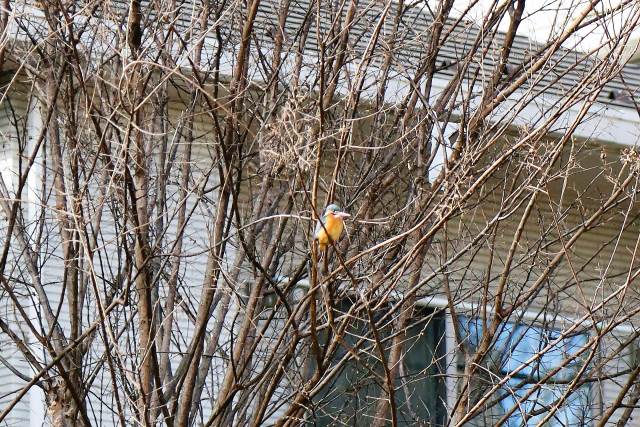
After taking a photo of Revaty backed by Tokyo Skytree, I stopped by at a park nearby. A bird with blue and orange-colored plumage then approached me. That was a kingfisher. I was surprised that the precious wild bird inhabits in an urban area like this. I didn't have a telephoto lens at that time, but managed to take the kingfisher picture by a standard lens. Bird shooting was completely different from that of trains, which are operated in accordance with timetables. I definitely prefer shooting trains to shooting birds.

A kingfisher perches on a tree in a park near Tobu Skytree station

Official information about the Tobu limited express train "Revaty":

Tuesday, 21 February 2023

EMU ex-1600 Series Celebrating the 1600th Post

Set D02 of the EMU Yoro Railway 600 (ex-Kintetsu 1600)series (October, 2016)

Thank you for visiting Tokyo Railway Labyrinth. This is the 1600th post since 2011. I hope that readers all over the world will continue enjoying Japanese railways and their related topics in this blog. In commemoration of the "1600th" post, I'm going to show you a train on the Yoro Railway with the number "1600" in its name.

Before that, I'd like to introduce Yoro Railway a little bit. It's a local railway company about 400 kilometers west of Tokyo. Connecting Kuwana and Ibi, its route length is 57.5 kilometers. The track is single and electrified. The route was spun off from Kintetsu in 2007. Different from the most Kintetsu lines, the gauge size of Yoro Railway is 1,067 millimeters.

Now, let's get down to the main topic. The EMU 600 series is a major fleet of Yoro Railway. You may say to me, "Wait! This is the 1600th post, so, the vehicle number should be "1600" not "600", shouldn't it?" In a sense, you're right. In reality, the former name of the EMU "600" series was the EMU Kintetsu "1600" series. It was renamed in 1992, when these cars were moved from the other Kintetsu lines. These cars are called "Senroku" among rail-fans. Senroku was a nickname of the Kintetsu 1600 series. It means "thousand (sen) and six hundreds (roku)" in Japanese. I like the ring of this word.

I hope that you will understand the history of the EMU ex-1600 series celebrating the 1600th post. Does that sound good?

Set D01 of the EMU Yoro Railway 600  (ex-Kintetsu 1600) series (October, 2016)

Saturday, 18 February 2023

Unit 123: Brother of the Nameless Tramcar

Tramcar unit 123 of the Sendai City Tram 100 series

After uploading my post about "the nameless tramcar" in Seibu-en Amusement Park, I remembered that his "brother" survives in Sendai City.

Unit 123 of the Sendai City Tram MoHa 100 series is one of the precious exhibits in Sendai Tram Museum. He is a little brother of the nameless tramcar in Seibu-en Amusement Park. It was built in 1952 by Niigata Tekko-sho. The MoHa 100 series is a middle-sized (11.9-meter-long) double-axle bogie car, and accommodates up to 88 passengers. It has two 38 kW direct current series motors, and its rated speed is 21 kilometers per hour. The traditional nose-suspension drive system is adopted. Unit 123 was specifically active in the post-WWII reconstruction period. I specifically like the front windows, which are asymmetrical. Unit 123 and the nameless tramcar in Seibu-en Amusement Park... they really look alike, don't they?

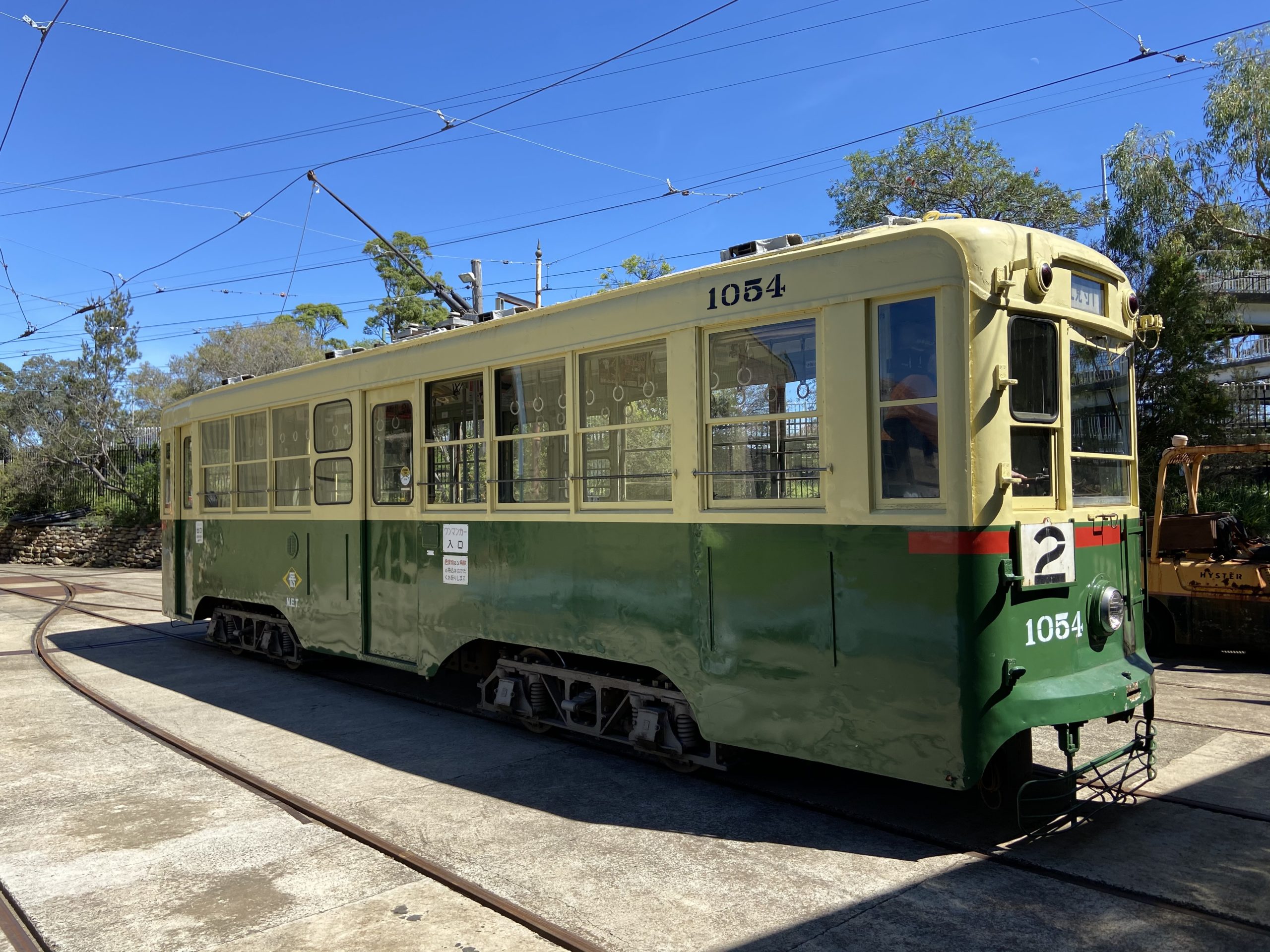
Incidentally, unit 123 had a total of 23 brothers. After the abolition of Sendai City Tram in 1976, 5 of them were transferred to Nagasaki Electric Tramway on Kyushu Island to spend their second life. Although they already had been retired from the track in Nagasaki as well, all of them are surviving as exhibits in a park, museums and a kindergarten to spend their third life. As you know, unit 117 is displayed in Seibu-en Amusement Park as the nameless tramcar. Unit 124 is preserved in a kindergarten of Nagasaki Prefecture. More surprisingly, unit 121 is exhibited in Sydney Tramway Museum, Australia under the name of "Nagasaki 1054". That's awesome!

Side view of unit 123

Official website, the Sydney Tramway Museum:
Official picture of "Nagasaki 1054":

Wednesday, 15 February 2023

Imaginary Town in the Showa Period

Unit 1051 of the tramcar ex-Nagasaki Electric Tramway 1050 series

After enjoying the Seibu-Yamaguchi line, I got off at Seibu-en-yuenchi (Seibu-en Amusement Park) station on the line. I suddenly encountered a retro town in front of the station. What was that?

The answer is an attraction in the amusement park. It's an imaginary town that makes visitors feel like they're traveling into the Showa period. Showa is one of the titles of the Japanese calendar system. It refers to the period between 1926 and 1989, when Emperor Hirohito was on the throne. I found a nostalgic tramcar in front of the imaginary town. What was that?

The answer is the electric car, unit 1051 of the ex-Nagasaki Electric Tramway 1050 series. It was originally commissioned in 1952 as unit 117 of the Sendai City Tram MoHa 80 series (later called the MoHa 100 series). After the abolition of Sendai City Tram in 1976, it was transferred to Nagasaki Electric Tramway, and renamed as unit 1051. It was eventually retired from the track in 2019, and moved to Seibu-en Amusement Park in 2021 as an attraction.

I was a little disappointed that unit 1051 had its body colors changed. There wasn't the name of the operator and the unit number on the body. There was also no description about the history of this tramcar. The destination and the name of the tram stop are all fictional... but it can't be helped. This is the imaginary town that makes visitors feel the nostalgic atmosphere of the Showa period. The nameless tramcar is better than nothing.

Retro town that makes visitors the nostalgic atmosphere of the Showa period